Wealth of choice notwithstanding, most TV viewers don’t know what they want to watch when they turn on their TVs1. This presents publishers with an enormous opportunity to connect them with personalized suggestions from their catalogs and keep them engaged. Too often, however, the cumbersome nature of today’s streaming landscape is spoiling the TV experience for viewers — and negative sentiment is rising.
Despite the freedom associated with exploring an ever-growing content landscape, 51% of streaming users say the abundance of content makes it harder to find something of interest. And when only 19% of viewers know exactly what they’re looking for, most content journeys start from scratch. Here, search fatigue becomes a barrier to a positive experience. It can even lead to abandonment, especially among young viewers.
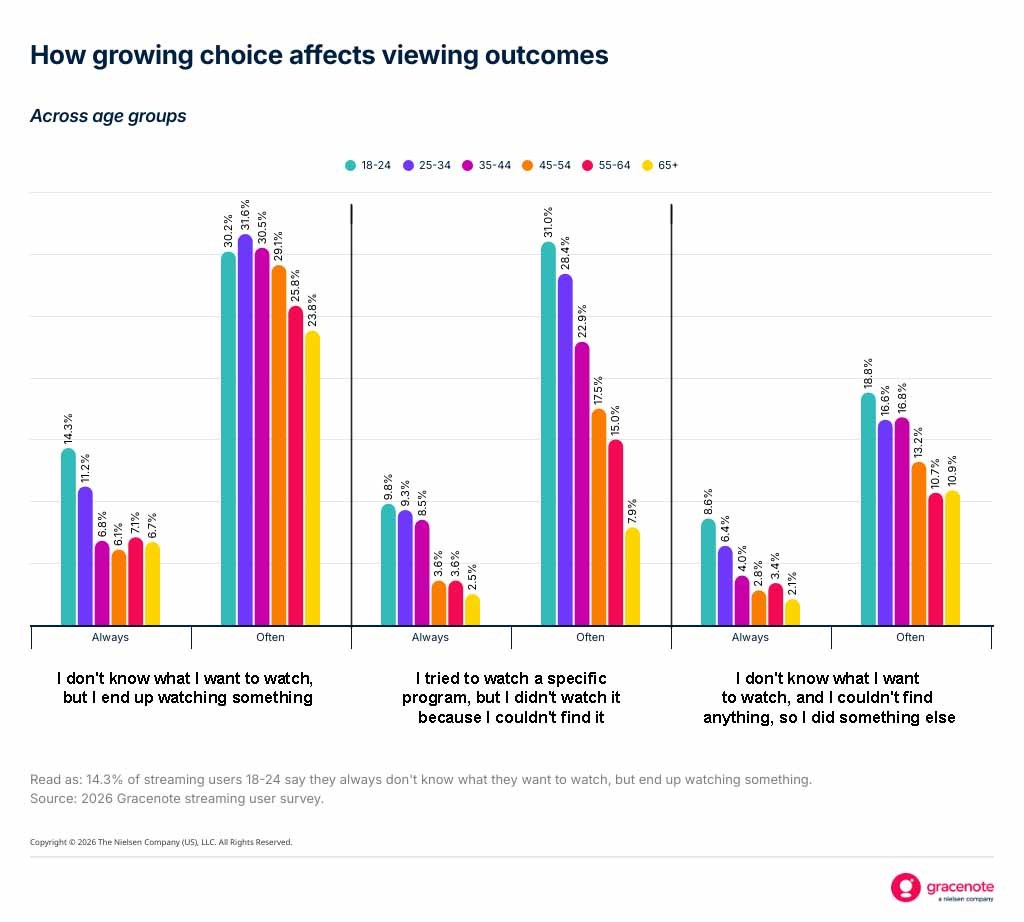
Through the lens of catalog size and streaming usage, connecting the 83.4% who don’t always know what they want to watch should be fairly straightforward, especially as companies use customer data and generative AI to create personalized experiences that foster long-term engagement and loyalty.
Audiences, however, aren’t finding what they’re looking for. On average, 47% of streaming viewers say they’re spending more time searching for something to watch than they were a year ago, highlighting the burden that content discovery has become for them.
50% of streaming users say they feel overwhelmed by the amount of streaming video services and content available
Collectively, the challenges associated with growing fragmentation heighten the risk of service cancellation. On average, more than 51% of people say they would consider canceling a service because they can’t find something to watch, up from 48% a year ago.
A better UX will solve discovery friction
While audiences may not know which TV shows or movies they want to watch, they do know what they’re interested in, how they’re feeling in the moment and how much of a time commitment they have available. Traditional user experiences, however, are too rigid for modern content discovery.
By using rich, contextual entertainment data and conversational search interfaces, service providers can pivot their UX strategies to real-world scenarios, constraints and behaviors. Here, they can facilitate meaningful content journeys that fit the moment, not the genre.
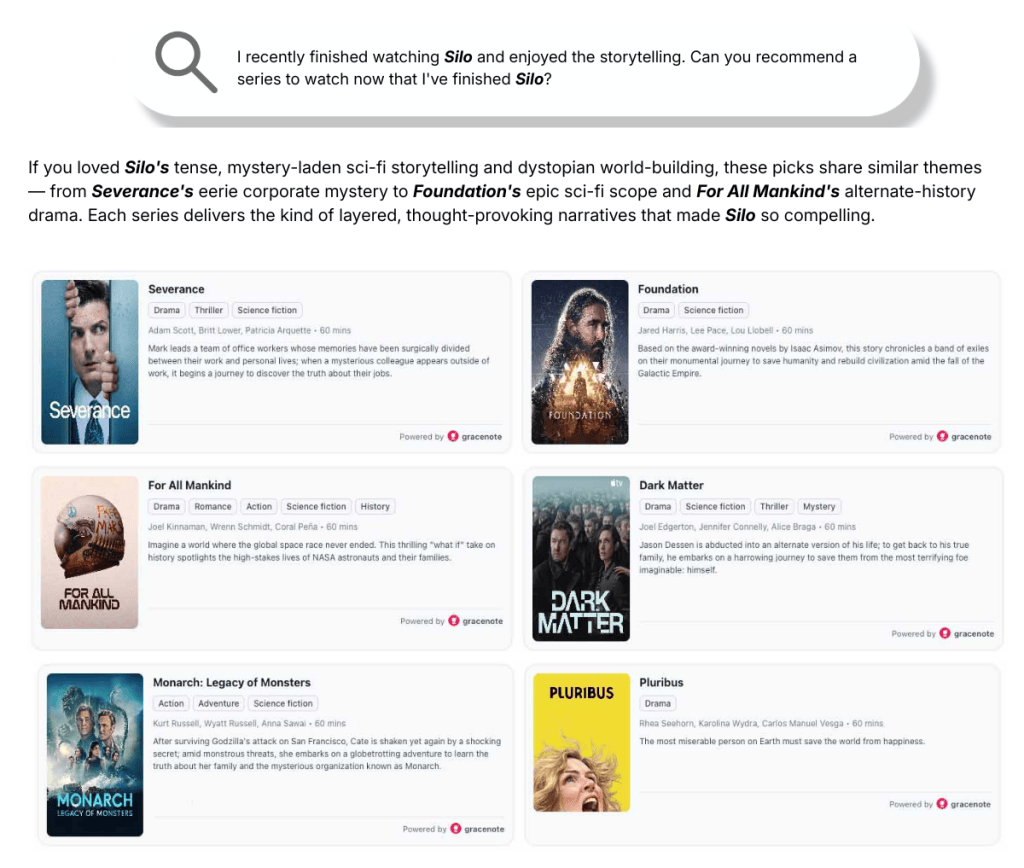
In addition to fostering personalized searches based on context, program availability data becomes critical in helping viewers find what they’re interested in once they’ve identified it.
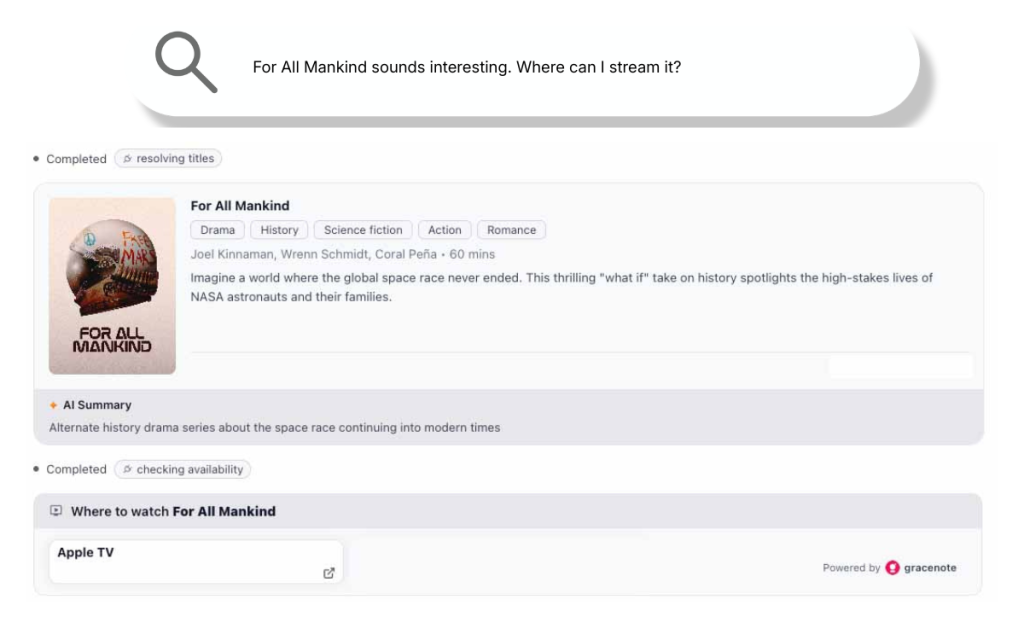
Here, the experience alleviates key content discovery friction points by removing the limitations of traditional infrastructures. The open-ended nature of the original query also generates responses that both answer the prompt and provide personalized recommendations.
31% of streaming viewers say they haven’t found a good source of recommendations
Streaming catalogs are already unwieldy to most viewers, and they’re only going to grow moving forward. Current user interfaces treat catalogs like warehouses, requiring users to know what they’re looking for, which fuels decision fatigue. Frustrations here are rising, and viewers are starting to expect a better experience from the services they pay for.
Globally, an average of nearly 88% of streaming viewers say the user experience is a primary factor when deciding which services to keep, which is up from 84.2% a year ago. In Brazil and Mexico, the percentages are above 90%.
As catalogs grow, implementing discovery experiences that leverage fluid, multidimensional layouts that signal depth and context will help publishers capitalize on both the value of broadly appealing content and deeper library content. When browsing experiences encourage open-ended, enjoyable exploration over endless scrolls and targeted recommendations, discovery becomes user-driven, dynamic and enjoyable.
For additional streaming insights, download our 2026 State of Play report.
Notes
- Only 16.6% of streaming users say they always know what they want to watch and then watch that content; 2026 Gracenote streaming user survey.
- Other data points in this article were also from Gracenote’s 2026 streaming user survey.
2026 State of Play
Streaming has become holistic in its offerings, amplifying growing content discovery challenges.
Programmatic CTV’s next advantage runs on content
Content intelligence brings what’s on screen into ad buying decisions today — and could give automated systems a richer input for optimization tomorrow.
The cost of fragmentation: Discovery challenges are pushing sports fans to highlights
Discovery is a bigger hurdle for sports fans than subscription cost.