Sports content is the lifeblood of television, and broadening distribution across the growing connected TV (CTV) landscape gives fans access to more programming than ever. Decentralized distribution, however, has complicated content discovery, even for massive events like the recent 2026 FIFA World Cup.
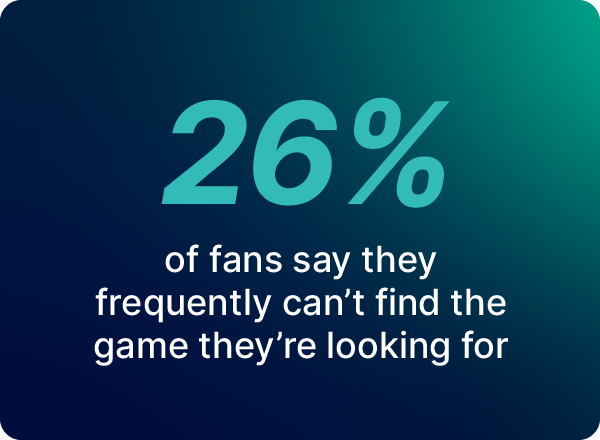
Uncertainty about where to find specific games and competitions highlights that availability no longer equates to discoverability. Without a unified guide, fans are often unsure where to find the games they’re looking for. The internet is their most-used resource, but one-third of fans say it doesn’t provide accurate, local game information.
19% of fans say it takes more than 10 minutes to find the game they’re looking for
– 2026 Gracenote global sports fan survey
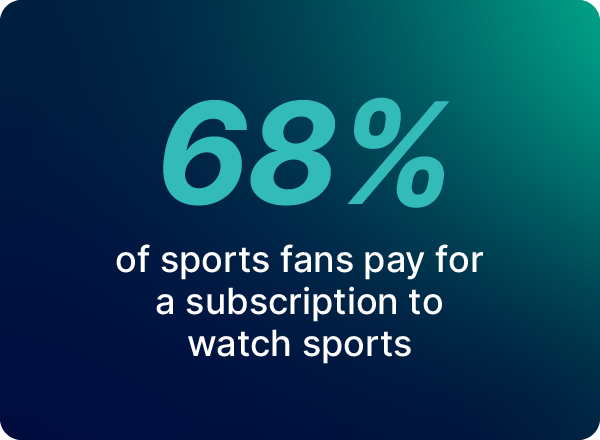
Content discovery challenges notwithstanding, fans have adopted streaming services to feed their appetites for sports: nearly 24% pay for three or more subscriptions to watch sports, and 50% say they would consider paying for an additional subscription for the live sports it offers.
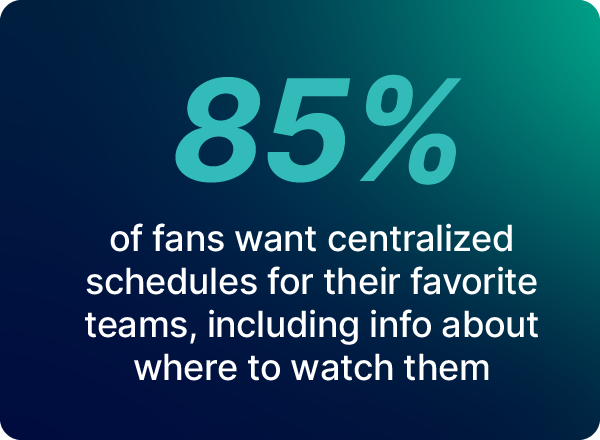
Given the appeal of sports and fans’ unwavering appetites for sports content, aggregators, TV OEMs and publishers can win the game with fans by centralizing the content they’re looking for, including game schedules and channel locations. With 85% of fans interested in centralized sports hubs, the result of frictionless content discovery, customer retention and extended engagement could be game changing for publishers and content providers.
The cost of fragmentation: Discovery challenges are pushing sports fans to highlights
Discovery is a bigger hurdle for sports fans than subscription cost.
Solving sports churn: the home screen advantage in modern streaming
Centralizing everything that fans are looking for can reduce churn and foster long-term engagement.
Live sports and news are the new heavyweights on FAST channels
FAST audiences have 26.6% more news programs and 37.5% more sports programs to choose from than they did a year ago.