
Von Tyler Bell, Senior Vice President, Produkt
Hier ist ein bekanntes Szenario: Bei der riesigen Auswahl an TV-Inhalten fragst du Freunde und Familie nach Serienempfehlungen, um dir das endlose Scrollen zu ersparen. Zum Glück empfiehlt dir ein Freund, der weiß, dass dir „Yellowstone“, „Landman“ und „Mayor of Kingstown“ gefallen haben, Taylor Sheridans neueste TV-Serie „The Madison“.
Da du es kaum erwarten kannst, die Serie zu starten, bittest du deine sprachgesteuerte Fernbedienung, die erste Folge zu suchen und abzuspielen. Doch statt des Dramas mit Michelle Pfeiffer in der Hauptrolle, in dem es um eine Familie geht, die von New York City in die Wildnis von Montana zieht, wird dir eine Reality-TV-Show über eine Gruppe junger Erwachsener gezeigt, die in Madison, Wisconsin, leben.
Das mag angesichts des großen Hypes um Taylor Sheridan und sein Imperium aus beliebten Fernsehserien unwahrscheinlich klingen. Es ist jedoch genau die Antwort, die ein ungeschultes LLM-Modell gab, als wir es nach Informationen zur neuesten Serie im Sheridan-TV-Universum fragten.
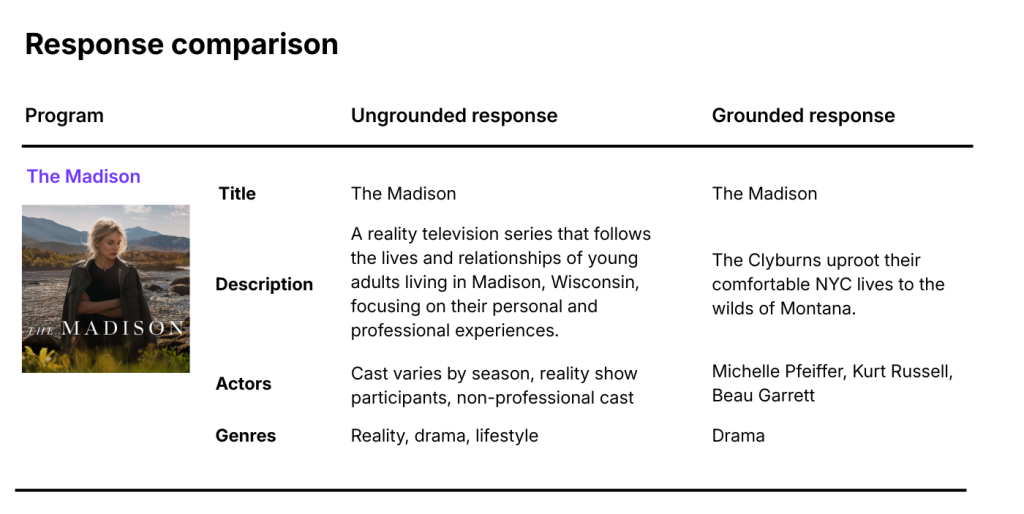
So überraschend diese Antwort auch erscheinen mag, sollte sie doch nicht überraschen. Denn LLMs weisen einige ganz grundlegende Einschränkungen auf.
Zwar zeichnen sich LLMs durch ihre Fähigkeit zum logischen Denken und zur Schlussfolgerung aus, doch sind sie nicht darauf ausgelegt, Fakten darzulegen. Als Vorhersagemodelle besteht ihre einzige Funktion darin, das nächste Token vorherzusagen. Und im obigen Beispiel verhindert die Wissensgrenze des LLM, dass es etwas über Ereignisse weiß, die nach dem Ende seiner Trainingsphase stattfanden – einschließlich der Premiere von „The Madison“ im März 2026.
Bei einem LLM hängt die Genauigkeit der Antworten ausschließlich von einer optimierten Plausibilität ab, nicht von Fakten. Daten und Training können die Ergebnisse verbessern, aber niemand sollte von einer Maschine, die darauf trainiert ist, auf der Grundlage von Wahrscheinlichkeiten zu antworten, faktische Gewissheit erwarten. Wie bei beliebten Chatbots wie ChatGPT und Gemini benötigt auch das LLM eines jeden Videoverteilungsdiensteseine „Grounding“-Funktion¹, um die von ihm gelieferten Antworten zu überprüfen, zu korrigieren und zu verbessern.
Im Gegensatz zu diesen beliebten Chatbots benötigen LLMs, die für die Suche und Entdeckung von Inhalten eingesetzt werden, jedoch eine fachspezifische Verankerung. Eine Verankerung mit zuverlässigen Unterhaltungsdaten würde beispielsweise verhindern, dass ein nicht verankertes LLM Informationen über eine Starz-Fernsehserie namens „Heels“ liefert, die von 2021 bis 2023 ausgestrahlt wurde, wenn es nach einem Spielfilm aus dem Jahr 2025 mit einem sehr ähnlichen Titel gefragt wird: „Heel“.
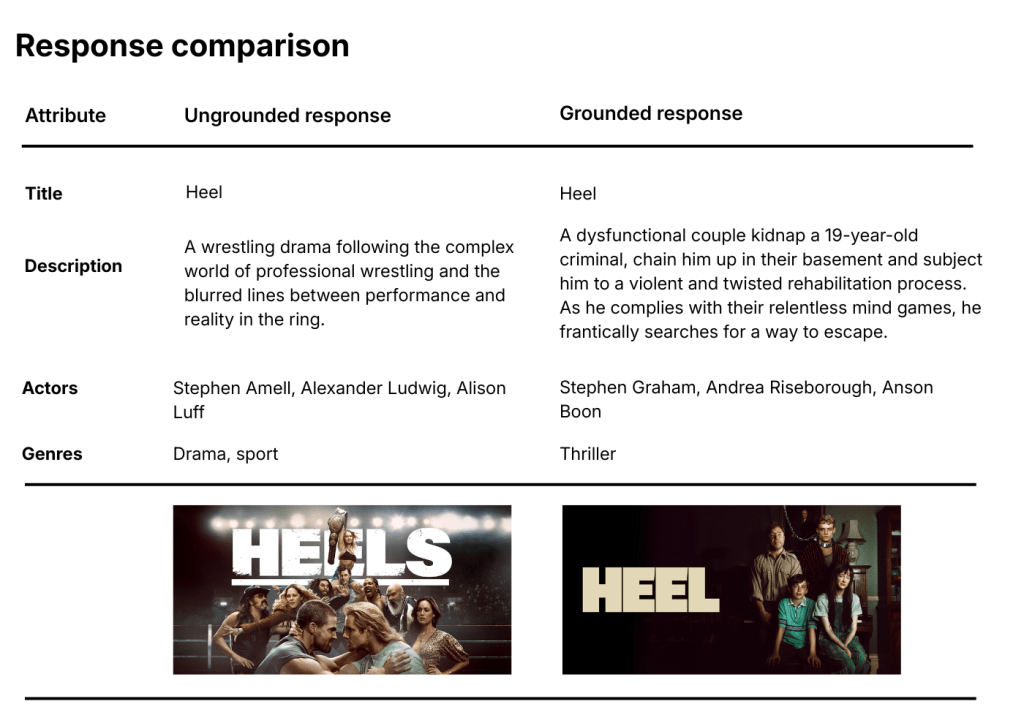
Angesichts wachsender Inhaltskataloge stellt die Suche nach Inhalten eine echte Herausforderung dar, da Fernsehzuschauer angeben, dass sie mittlerweile 14 Minuten damit verbringen, nach etwas zu suchen, das siesich ansehen können2. LLMs sind in der Lage, die Herausforderungen bei der Inhaltssuche für das Publikum zu lösen, doch sie können dies nicht alleine bewältigen.
Durch die Verankerung in der Realität bleiben LLMs am Puls der Zeit
Da sie sich ausschließlich auf ihre Trainingsdaten stützen, sind LLMs keine umfassenden Wissensdatenbanken. Diese grundlegende Eigenschaft ist der Hauptgrund dafür, dass LLMs externe Daten benötigen, um sicherzustellen, dass die von ihnen gelieferten Antworten aktuell und korrekt sind. Ohne externe Anknüpfungspunkte machen Wissenslücken LLMs beispielsweise blind für alle Inhalte, die nach ihrer Einführung veröffentlicht werden – eine erhebliche Einschränkung, wenn man bedenkt, wie viele neue Fernsehserien und Filme jedes Jahr erscheinen.
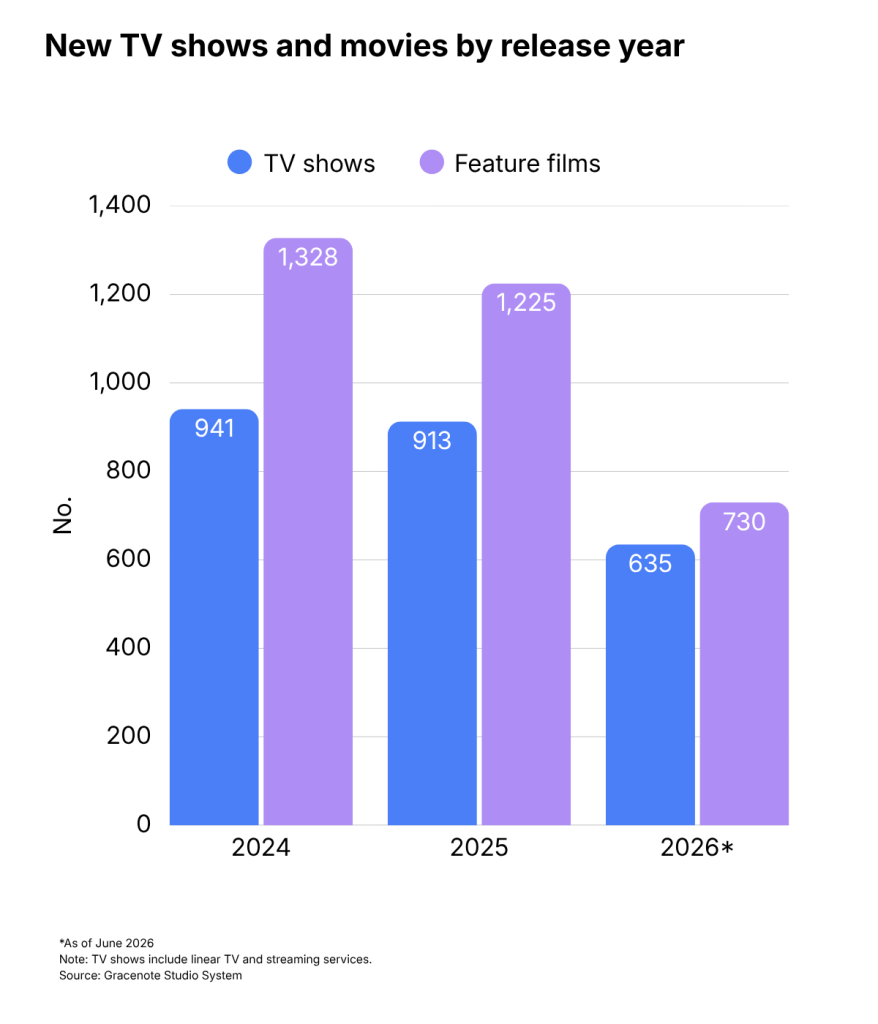
Auch wenn dies für das Publikum frustrierend sein mag, könnte die bestmögliche Antwort eines LLM auf die Frage nach einer Neuerscheinung darin bestehen, einfach die Einschränkungen seiner Trainingsdaten anzuerkennen. In einer aktuellen Studie der „ Gracenote “ tat ein im Mai 2025 veröffentlichtes, nicht auf realen Daten basierendes LLM genau dies und wies darauf hin, dass es über keinerlei Informationen zu einer Reihe von aktuellen Mainstream-Filmen verfüge, die in den Jahren 2025 und 2026 erschienen sind.

Häufiger jedoch erfinden LLMs Dinge, die sie nicht wissen (d. h., sie „halluzinieren“), und das tun sie mit großer Überzeugung. Dies birgt erhebliche Risiken für die Nutzererfahrung in der Welt der Unterhaltung, insbesondere angesichts der zunehmenden Fragmentierung und der Vielzahl von Neuauflagen, die denselben Namen wie ihre Vorgänger tragen.
Um die Auswirkungen von Halluzinationen auf die Inhaltssuche besser zu verstehen, haben wir in unserer aktuellen Studie untersucht, wie viele Informationen ein LLM ohne Kontextbezüge über die 100 beliebtesten TV-Episoden und die 100 beliebtesten Filme in 13 Ländern erfunden hat. Von den insgesamt 2.600 Titeln hat das LLM ohne Kontextbezüge bei 506 Titeln (fast 20 % der Gesamtzahl) 100 % der Informationen auf Attributebene erfunden.
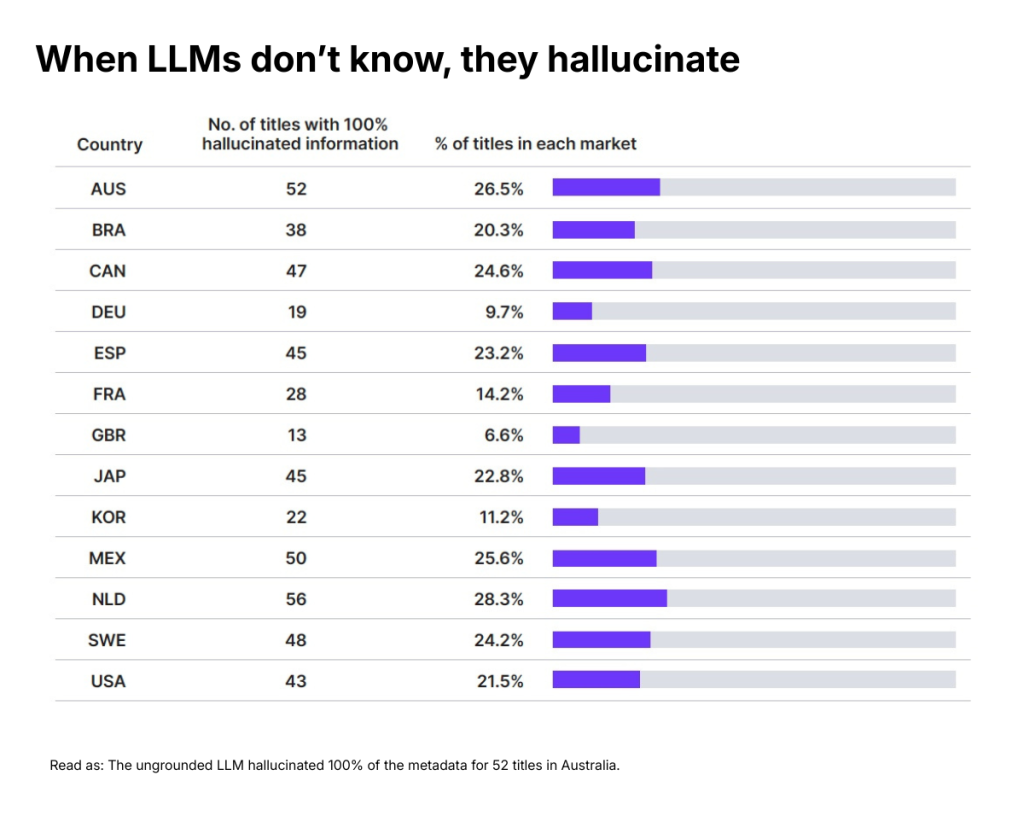
LLMs können keine sachliche Gewissheit liefern
Insgesamt führen die infrastrukturellen Einschränkungen, die mit begrenzten Trainingsdaten, der Vorhersage des nächsten Tokens und einem Mangel an verankerten Daten einhergehen, zu einer negativen Erfahrung für Fernsehzuschauer. Letztendlich hängt eine positive Nutzererfahrung davon ab, dass die Zuschauer das finden, wonach sie suchen. Hier sind nicht verankerte LLMs der Aufgabe nicht gewachsen, schlichtweg weil eine sachliche Genauigkeit unmöglich ist.
Für Streaming-Dienste ist eine nicht fundierte KI keine reine Theorie. Wenn ein Assistent eine Handlung erfindet, falsche Darsteller angibt oder ähnliche Titel verwechselt, werden die Zuschauer nicht dem Modell die Schuld geben. Sie werden das Erlebnis dafür verantwortlich machen, weshalb eine fundierte Grundlage für Vertrauen, Kundenbindung und Monetarisierung unerlässlich ist.
Gerade dieses Risiko macht die Lösung des Problems der Inhaltssuche so dringlich, und die größte Herausforderung, vor der das Publikum derzeit steht, ist es, etwas zu finden, das es sich ansehen kann. LLMs werden hier eine entscheidende Rolle spielen, doch erfolgreiche KI-Strategien lassen sich nicht allein durch größere Modelle aufbauen.
Stattdessen werden erfolgreiche Medienunternehmen und Streaming-Anbieter direkt in ihrem KI-Stack umfassende und aktuelle Content-Intelligence aufbauen, die über lizenzierte Datensätze, MCP-Server oder andere Verbindungen zu einem maßgeblichen Wissensgraphen bereitgestellt wird.
Agenten und Models: Aber der Chatbot macht das gut…
Hier gibt es einen entscheidenden Unterschied in der Welt der KI: Wenn Sie als Verbraucher mit ChatGPT, Gemini oder Claude interagieren, erleben Sie nicht das Modell, das Sie beruflich von OpenAI, Google bzw. Anthropic lizenzieren würden. Stattdessen interagieren Sie mit einem Agenten, einer Implementierung des zugrunde liegenden Modells, die mit einer Vielzahl von Zusatztools und Daten kombiniert ist.
Haben Sie eine Frage zur Mathematik? Das Modell leitet diese an ein Rechen-Tool weiter. Möchten Sie etwas über ein aktuelles Ereignis, Sportergebnisse oder die neuesten Nachrichten erfahren? Das Modell leitet diese Anfrage an ein spezielles Tool weiter, das das Internet durchsucht. Diese Chatbots für Endverbraucher stützen sich auf Dutzende – wenn nicht Hunderte – von fach- und aufgabenspezifischen Tools und Datenquellen, um das fundierte Kundenerlebnis zu bieten, das sie auszeichnet.
Wenn Sie ein LLM in Ihrem Entertainment-Stack einsetzen, haben Sie keinen Zugriff auf dieselben Tools und Daten wie beim Chatbot für Endverbraucher. Das LLM ist eine unvollständige Lösung. Hier müssen Sie Ihre eigenen Daten und Tools bereitstellen, um:
- LLM-Antworten filtern, um endemische Halluzinationen zu verhindern
- Ergänzende Funktionen bereitstellen, die das LLM nicht selbst ausführen kann, und
- Stellen Sie sicher, dass das Modell Zugriff auf aktuelle Informationen hat.
Spezifische Tools, wie beispielsweise MCP-Server, werden innerhalb eines Agenten mit Verhaltensanweisungen (der Systemaufforderung) und Geschäftslogik kombiniert. Sie werden wahrscheinlich für jede KI-bezogene Aufgabe in Ihrem Entertainment-Stack einen eigenen Agenten implementieren, doch alle werden dasselbe LLM und weitgehend dieselben Tools nutzen.
Dieser Artikel erschien ursprünglich auf Streaming Media.
Die Kosten der Fragmentierung: Schwierigkeiten bei der Informationssuche treiben Sportfans zu den Highlights
Für Sportfans ist die Suche nach Angeboten eine größere Hürde als die Abonnementkosten.
Das Problem der Abwanderung bei Sportübertragungen lösen: Der Vorteil des Startbildschirms im modernen Streaming
Indem man alles, was Fans suchen, an einem Ort bündelt, kann man die Abwanderungsrate senken und eine langfristige Bindung fördern.
Vorteile des Startbildschirms
Zentralisierte Sportplattformen könnten für Inhaltsanbieter eine bahnbrechende Entwicklung darstellen.